BGU Satellite Cyber-Attack Monitoring
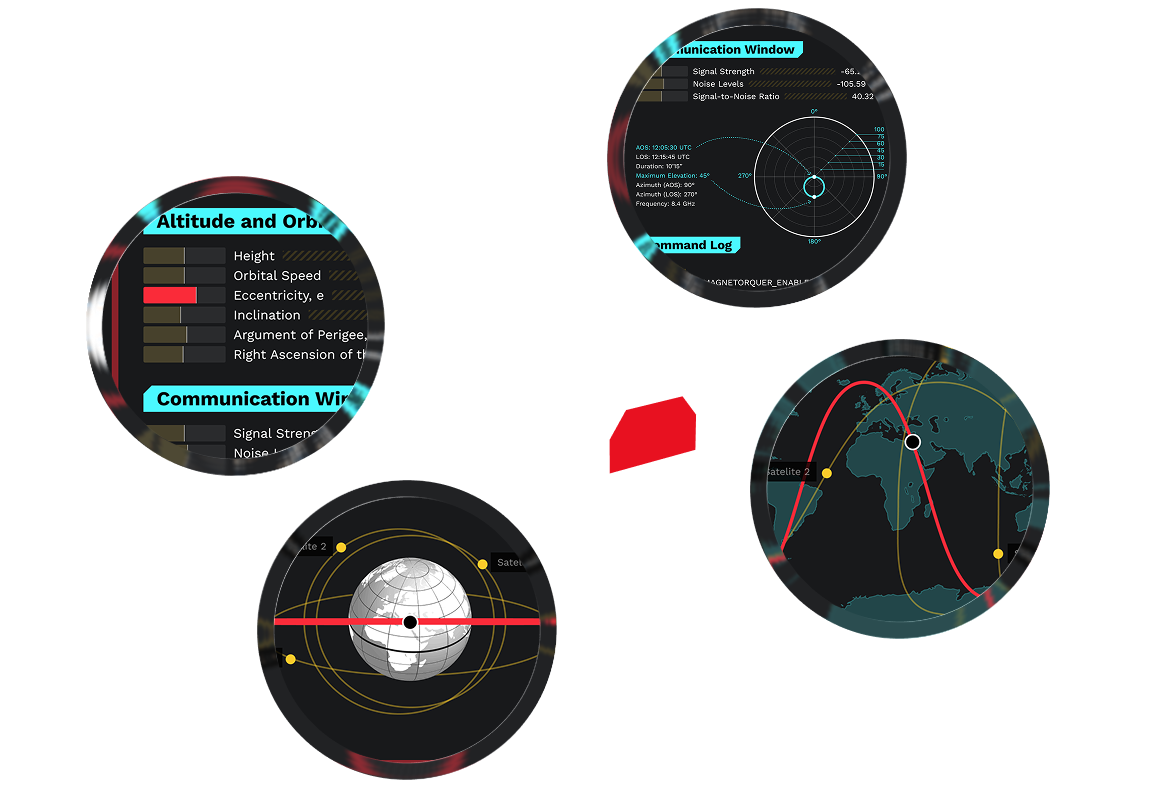
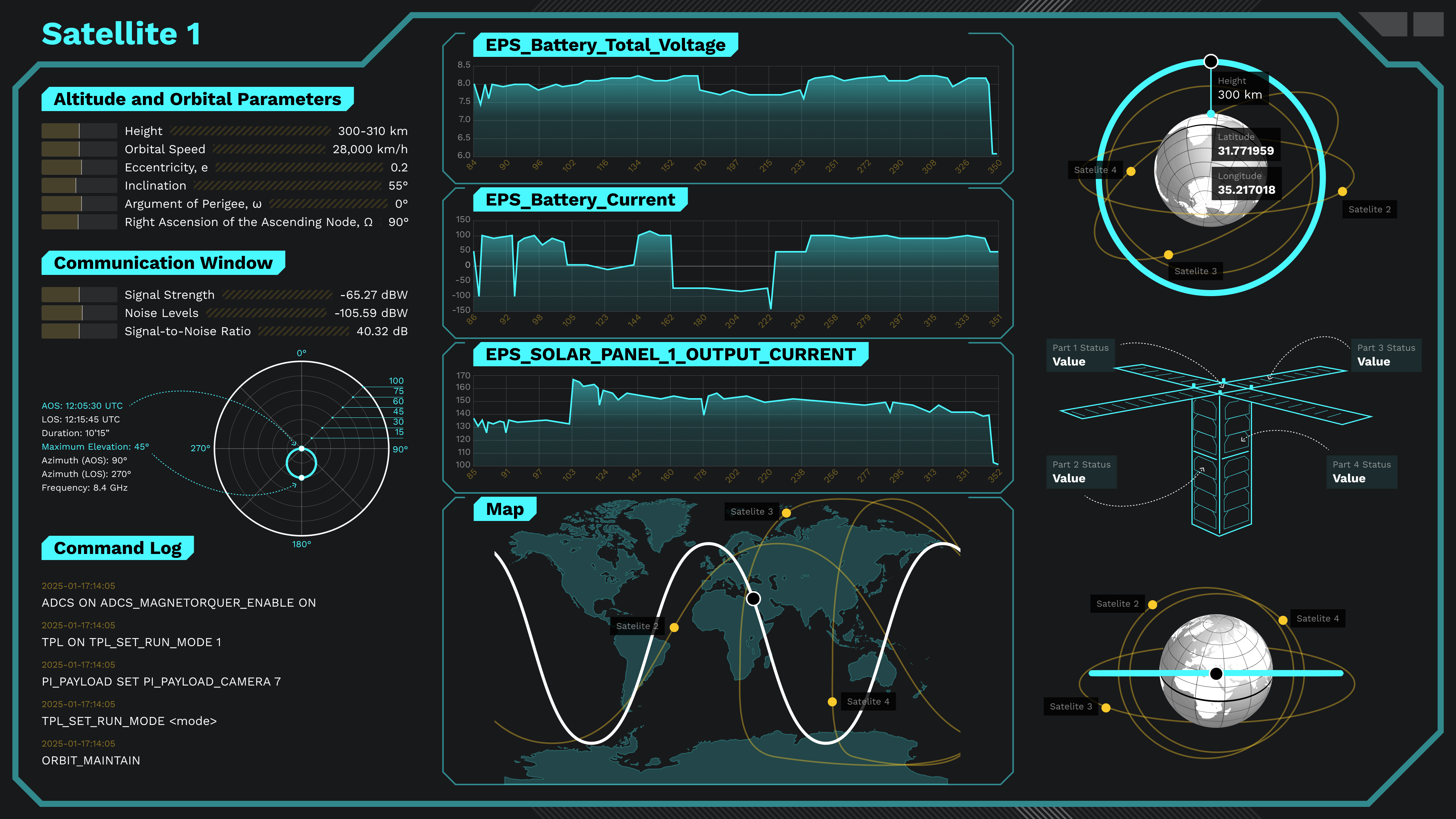
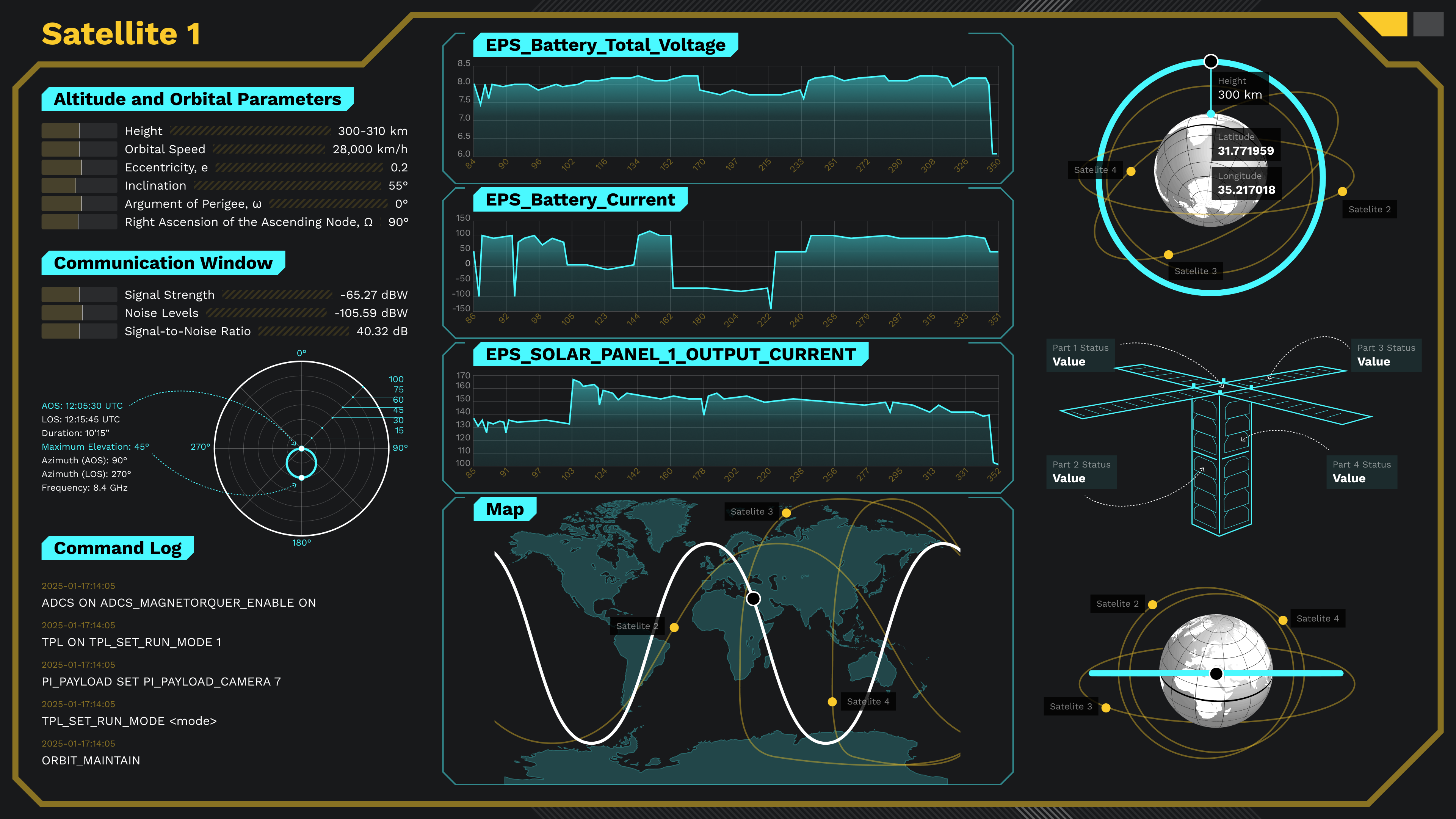
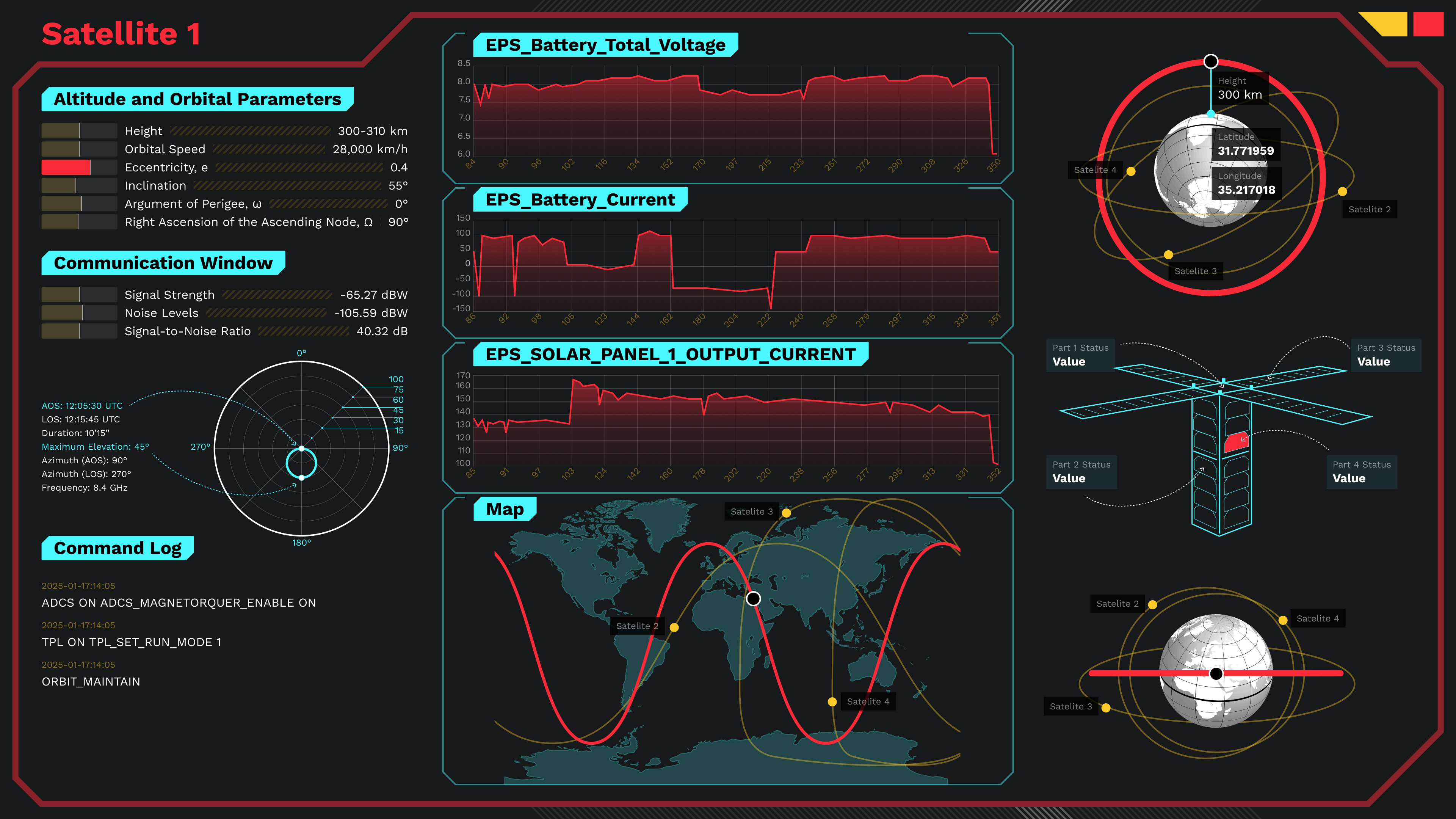
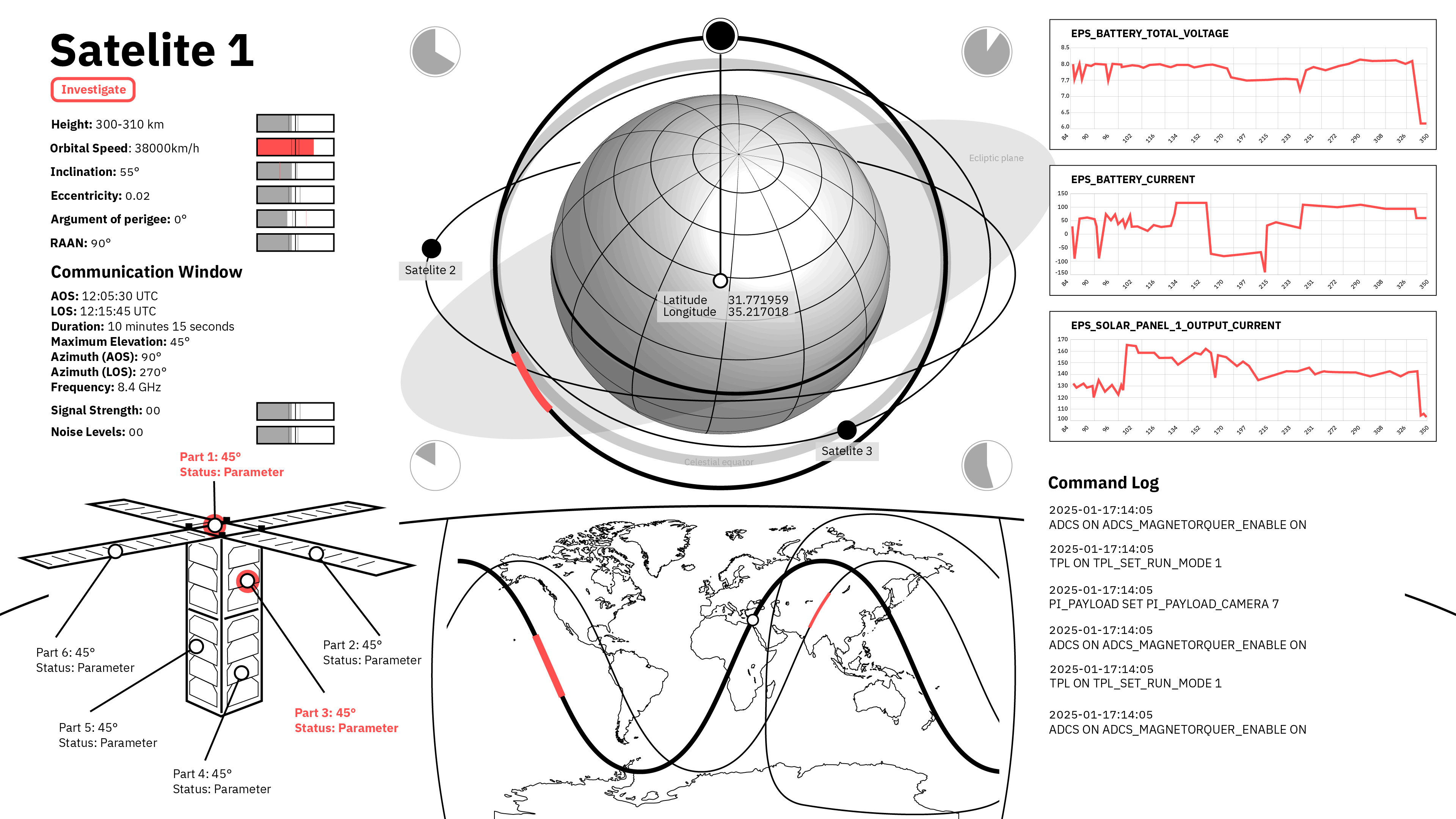
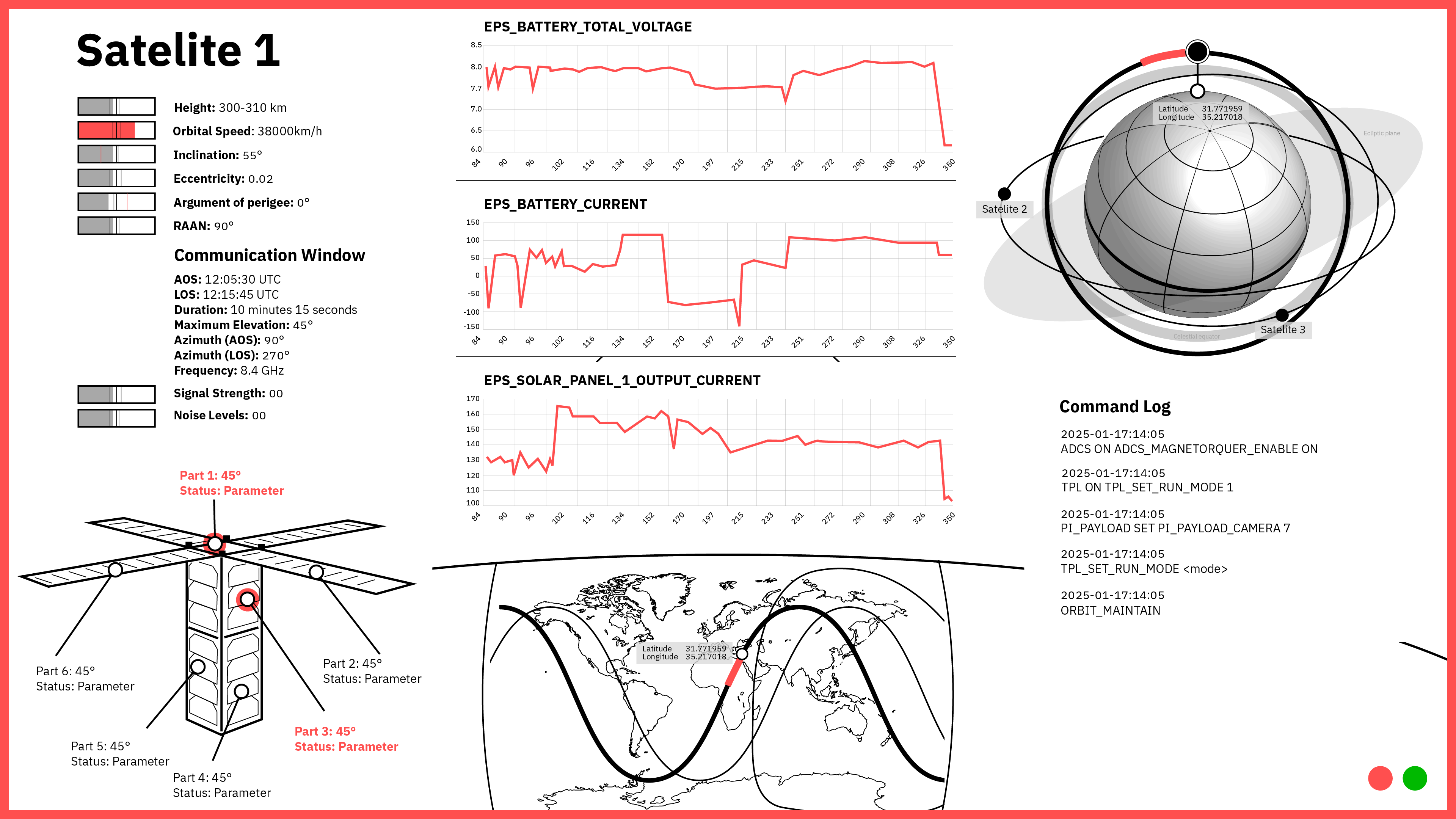
A real-time monitoring interface designed for a flight control room display, built for researchers at Ben-Gurion University of the Negev — Israel's acknowledged leader in cybersecurity research, whose teams actively publish work at the intersection of space systems and cybersecurity. The dashboard visualizes live satellite telemetry and automatically shifts its visual state to signal three threat levels: normal operation, suspected attack, and confirmed attack.
My Role
- Designed a dashboard for a wall display in a flight control room, where the reader is meters away and not looking at it most of the time.
- Compressed dozens of live parameters per satellite — power, communications, orbital data, attitude — into three states the room reads at a glance: normal, suspected attack, confirmed attack.
- Designed the color-coded system carrying those states, and the full UI for each of them.
- Wrote the handoff guide specifying component behavior, state transitions, and visual specs, fitted to the client's software architecture.
Dashboard
Wireframes
Detailed research on satellite management in control rooms, study of the orbital parameters of spacecraft
Project Results & Impact
This project for Ben-Gurion University of the Negev supports the next step in advancing Israeli space technology. Together with colleagues, I designed an interface built for a large display screen in a flight control center, enabling operators to manage a satellite constellation while simultaneously monitoring each satellite for potential cyber-attacks. The system tracks dozens of individual parameters per satellite — including power supply, communications, orbital data, and spacecraft attitude — surfacing anomalies in real time. The interface was tailored to the client's software architecture and development requirements to ensure a smooth technical handoff.

~40% faster threat identification via color-coded system states
Sub-3-second state recognition on large-format control-room displays
Faster operator onboarding through mission-control-informed UX logic

BGU Satellite Cyber-Attack Monitoring
A real-time monitoring interface designed for a flight control room display, built for researchers at Ben-Gurion University of the Negev — Israel's acknowledged leader in cybersecurity research, whose teams actively publish work at the intersection of space systems and cybersecurity. The dashboard visualizes live satellite telemetry and automatically shifts its visual state to signal three threat levels: normal operation, suspected attack, and confirmed attack.
My Role
- Designed a dashboard for a wall display in a flight control room, where the reader is meters away and not looking at it most of the time.
- Compressed dozens of live parameters per satellite — power, communications, orbital data, attitude — into three states the room reads at a glance: normal, suspected attack, confirmed attack.
- Designed the color-coded system carrying those states, and the full UI for each of them.
- Wrote the handoff guide specifying component behavior, state transitions, and visual specs, fitted to the client's software architecture.
Dashboard
Wireframes
Detailed research on satellite management in control rooms, study of the orbital parameters of spacecraft
Project Results & Impact
This project for Ben-Gurion University of the Negev supports the next step in advancing Israeli space technology. Together with colleagues, I designed an interface built for a large display screen in a flight control center, enabling operators to manage a satellite constellation while simultaneously monitoring each satellite for potential cyber-attacks. The system tracks dozens of individual parameters per satellite — including power supply, communications, orbital data, and spacecraft attitude — surfacing anomalies in real time. The interface was tailored to the client's software architecture and development requirements to ensure a smooth technical handoff.
~40% faster threat identification via color-coded system states
Sub-3-second state recognition on large-format control-room displays
Faster operator onboarding through mission-control-informed UX logic